
Through My Eyes
*
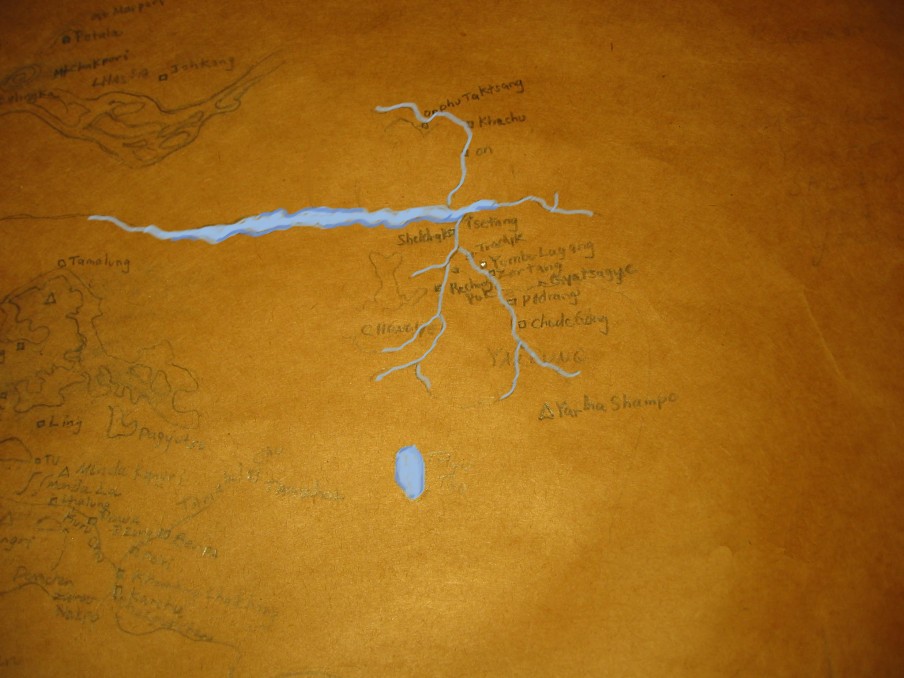
We've made our way south along the Yarlung to Yumbu Lagang! I've shown the area near Yamdrok so we can get a sense of where it is on the plateau. There is so much here! It makes sense when we look at the landscape here with a lot more lower altitude areas that would have been somewhat easier to build in. This was the fortress where the first King of Tibet ruled. At that time the Bon faith was the prevalent religion with it's powerful deities. Many Kings and Queens ruled before the reign of Songsten Gampo and his Queens and before the tremendous shamanic undertaking of Padmasambhava to make the deities there protectors of Buddhism. Many were buried in enormous tombs in Chongye;we'll head there a bit later. The building that is there now is a reconstruction built in 1982 as the original building and other subsequent structures were destroyed, you know how. Anyway the original building was very important as the very first Buddhist scriptures arrived here. Some say on they fell onto the palace roof and remained there incomprehensible yet revered for a few hundred years until the reign of King Songsten Gampo and his Queens. Others say the texts were brought by a scholar from India called Buddharaksita. Either way they were the 'nyenpo sangwa' , the "awesome secret"! Their result certainly was an awesome transformation of the Tibetan existence! It has some fascinating murals to inspire us! Somewhere a bit north or south of Yumbu Lagang is a place called Zortang which was the first agricultural field in Tibet. Farmers put a bit of soil from here onto their fields to ensure an abundant harvest. This actually makes sense from a energetic shamanic perspective of course as does the idea of putting the hair or remains of spiritual masters into the stupa monuments. The mind directs the energy and these spiritual masters had very trained minds so their energy was very strong! Their remains were energetically connected with them and thus allowed future pilgrims to benefit from that energy's contact with their minds. So too the energy of the soil from the sacred field could have a beneficial effect on the lands upon which it is sprinkled. That's my understanding of this anyway. I've read it is also custom in Tibet to have the scriptures read over the fields at the beginning of the season; a lama goes from field to field with everyone; it's a day long festival of sorts! Awesome isn't it? There are a bunch of stupas, over a hundred to the east of Podrang at a place along the road called Gyatsagye and a major one called Takchen Bumpa. Two as one we'll add to the notes later beautiful one as it's a bit late now!

* courtesy of A Luminous Diamond (Bright) Crystal Show productions. The information for
the sketches is courtesy of the Footprint Tibet handbook by Gyurme Dorje.
 ( please click here to return to my spinning for you!)