
Through My Eyes
*
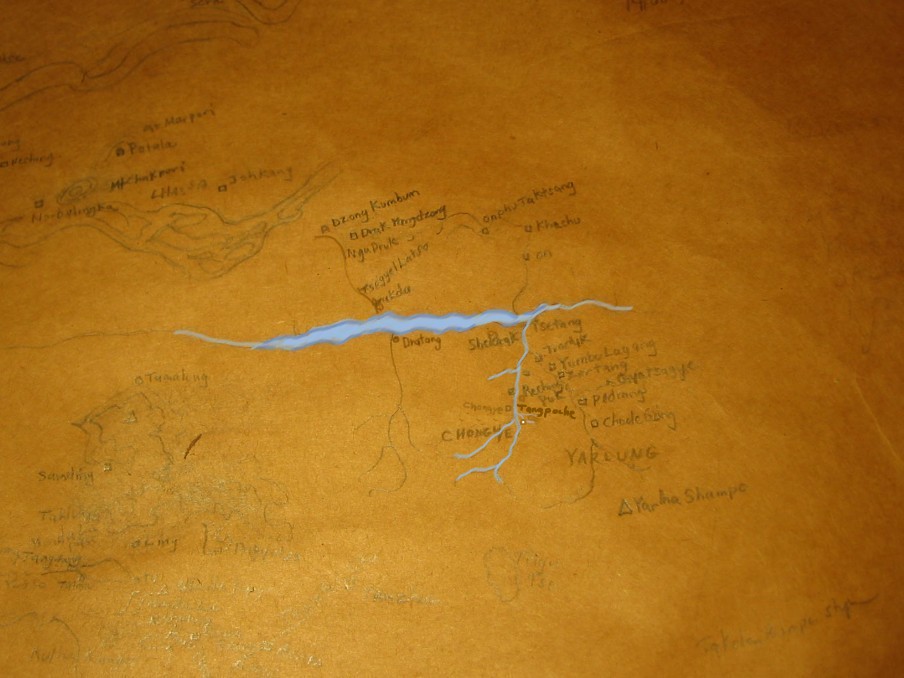
We're at the tombs of the Yarlung Kings at Chongye. Actually we're standing at the tomb of Songsten Gampo. No one is actually sure he died as such though! I guess now is as good a time as any to think about the Tibetan views of death at least as best as I understand it. We know of the sky burial way of respectfully disposing of the body as a gift to living beings. Other than this though, preparation of the body after death is regarded as nowhere near as important as preparation of the mind for the next incarnation! The body is left undisturbed for three days and prayed over constantly by a lama reading the Tibetan Book of the Dead. The purpose of this is to guide the soul through the transition so that it will have a favorable rebirth. Some practitioners are highly skilled at this and can tell from various subtle cues where the soul is in the transition and if there are any difficulties. Very shamanic! Highly advanced practitioners having trained their minds assiduously who themselves are leaving the body can actually control the process at will. There are certain signs of such ability. In the case of King Songsten Gampo it is said his body actually disappeared as it dissolved into one of the famous meditation statues of Lhasa. This has been described in other accounts of advanced lamas. In other cases over a period of days the body gets smaller and smaller inside it's wrappings. A flash of rainbow colors then appears around the dwelling where the body was left. The only thing left are the nails and the hair! This "rainbow body" is a known phenomenon and lamas will verify and document such cases carefully. We've read of others, such as when the Dalai Lama describes how the body of his predecessor turned it's head toward the direction of his next incarnation or those of the Tertons who know precisely where a hidden precious text or statue is to be found,in many cases because they themselves put it there centuries before! These sound remarkable yet are accepted in a culture that sees the body as but a vessel, with death to be carefully prepared for as a transition and as an opportunity. In any case King Songsten Gampo was such an advanced practitioner of course! I wonder where he might be? Anyway, the Chingwardo and Dungkhar valley meet and join the Chongye and it is there that many of the greatest Kings of Tibet are buried to the east across the Chongye river . Some are buried in the Chingwardo valley, some in the Dungkhar and some on the slope of the Mulari hill between the two. King Lhatotori Nyentsen was said to be buried in the Chingwa Taktse Castle on the Chingwari ridge that stands above the town of Chongye to the south although that conflicts with the account in our Footprint Tibet handbook that describes his having been interred in the ridge above Yumba Lagang. The Chingwa Takste was the palace fortress of the Yarlung Kings until King Songsten Gampo and his Queens established Lhasa as the new capital. There's quite a bit more but two as one we'll add to the notes later beautiful one as it is again a bit late!

* courtesy of A Luminous Diamond (Bright) Crystal Show productions. The information for
the sketches is courtesy of the Footprint Tibet handbook by Gyurme Dorje.
 ( please click here to return to my spinning for you!)