
Through My Eyes
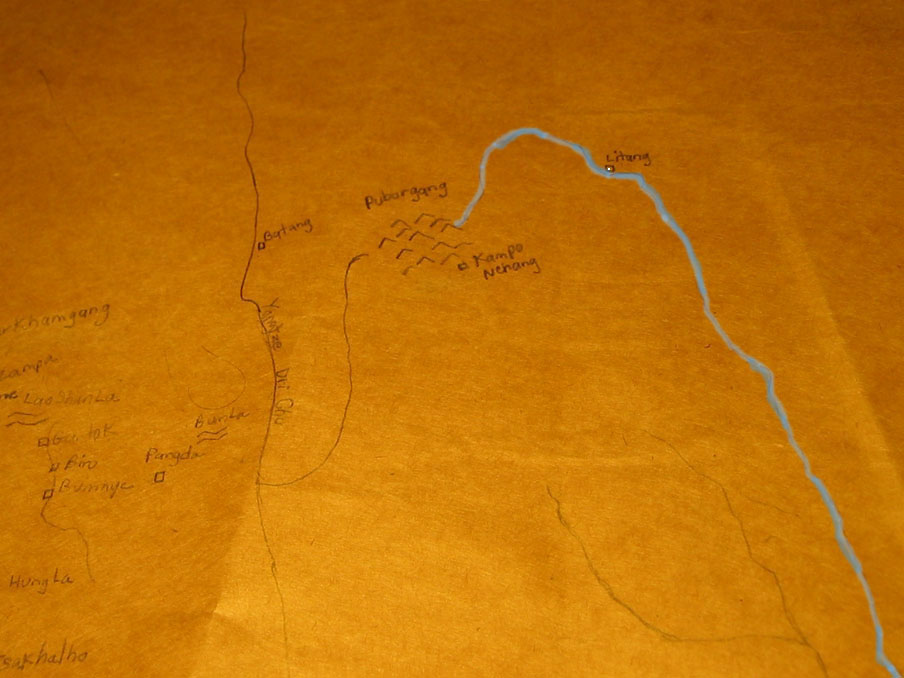
*
We're still resting at the Serkhang Nyingba of the Litang Chode! There's not much more to say of it but I wanted to tell something of Shridevi again. Certainly she has been important in enabling Tibetans to survive the Chinese communist occupation! Our Footprint Tibet handbook indicates her Tibetan name is Palden Lhamo and that she has both peaceful and wrathful forms. This makes sense since when trying to overcome the emotions and destruction caused by war it is necessary to have tremendous fortitude but also tremendous mental adaptability and skill to apply the necessary mental antidotes at the precise moments they are necessary to heal the mind. One moment a hard unyielding approach is needed to enable beings to survive the ordeal, the next a softness is needed to allow the healing process of grieving to occur. The rebuilding on the sacred sites is just the natural consequence of the rebuilding of calmness in the mind since any temple that isn't built by those who have some measure of equanimity will not be of much use! The Tulkus would have much to do at the site of the Litang Chode. They would have had to deal with their own mental reactions since they may have been witnesses to the destruction themselves and probably saw many practitioners killed and imprisoned. They also would have felt the presence of those who had lost their lives at the site and had to aid them much in the manner that Sarangerel describes. Being tulkus that have perfected their practice over many lifetimes and being under the protection of Shridevi though they were prepared for the task! Anyway, one of Shridevi's forms or aspects is Remati or Gyelmo Makzorma who is the protectoress of Lake Lhamo Lhatso as we know well! I wasn't able to find the mantra associated with her but it must be a powerful one! There's a lot more to add but as usual two as one we'll add to the notes later beautiful one!

* courtesy of A Luminous Diamond (Bright) Crystal Show productions. The information for
the sketches is courtesy of the Footprint Tibet handbook by Gyurme Dorje.
 ( please click here to return to my spinning for you!)